
Do you want to build a house? You’ll need bricks. Do you want to speak a foreign language? You’ll need vocabulary! Without knowing lots of words, you won’t make it very far. In fact, you will neither understand people speaking the foreign language nor be able to say something in it yourself. Without bricks, your house would just be a pile of useless cement and without vocabulary, your knowledge of grammar, no matter how deep, would be good for next to nothing.
But how to learn vocabulary without forgetting it?
I’m sure you can still remember those years of dull memorization of new words back in school. I was able to learn about 100 new words before every test, but a week later, I could only recall about five of them. Needless to say, memorizing long lists of words was incredibly tedious. And this is where it gets better! Luckily nowadays, you can forget all about these ancient learning methods and acquire new vocabulary quickly, effectively and in a fun way, thanks to a special system and flashcards.
Flashcards are fun and you can even choose whether you want to work with them in digital or paper form. Digital cards mean less work, but if you’re trying to limit your screen time, you might want to opt for paper flashcards, which allow you to put technology aside for a bit and practice your handwriting, too! (Have you also pretty much forgotten how to write with a pen? I think a bit of writing practice won’t hurt any of us.) Both digital and paper flashcards are a very efficient way of learning vocabulary as long as you stick to the system which hides behind the mysterious name “SRS”.
SRS – Spaced Repetition System
If you’ve ever tried learning vocabulary, you know that it doesn’t happen automatically. Quite often, our brain tends to forget what it learned just a few days ago. Perhaps this kind of experience left you disappointed and thinking that you simply didn’t have what it takes to learn a foreign language. But don’t worry, that’s not true at all! It’s completely normal and everyone goes through the same thing. Our memory does not work on command and it’s only natural that we forget things.
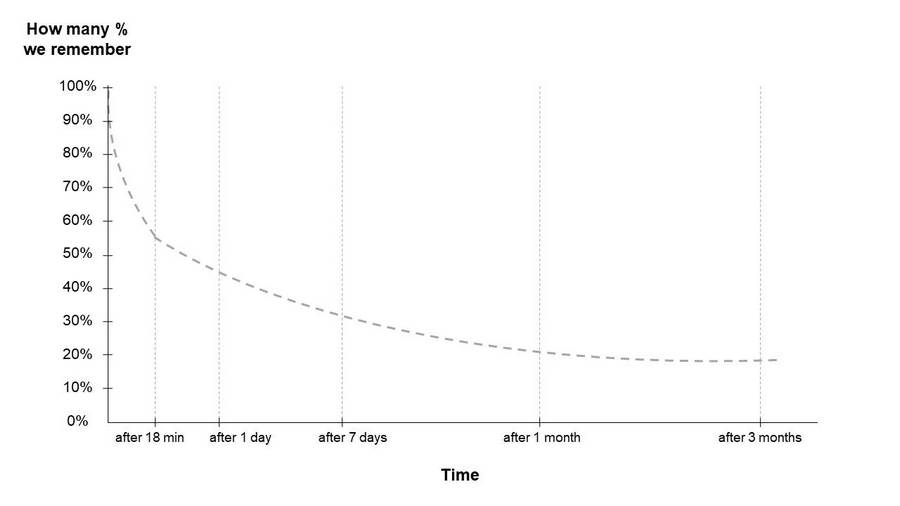
As you can see from the Ebbinghaus’ curve above, in just 18 minutes, we forget almost half of the words we learned. This is quite natural and shouldn’t be a reason for frustration.
Thankfully, a few great minds got together, did some research, and found a solution to our natural forgetfulness – the SRS, or Spaced Repetition System. To put it briefly, according to their theory, we need to see a word repeatedly in order to really remember it. The more difficult it is, the more often we need to see it. If it’s easy and we can remember it right away, we don’t have to review it so often. Yes, it’s that simple!
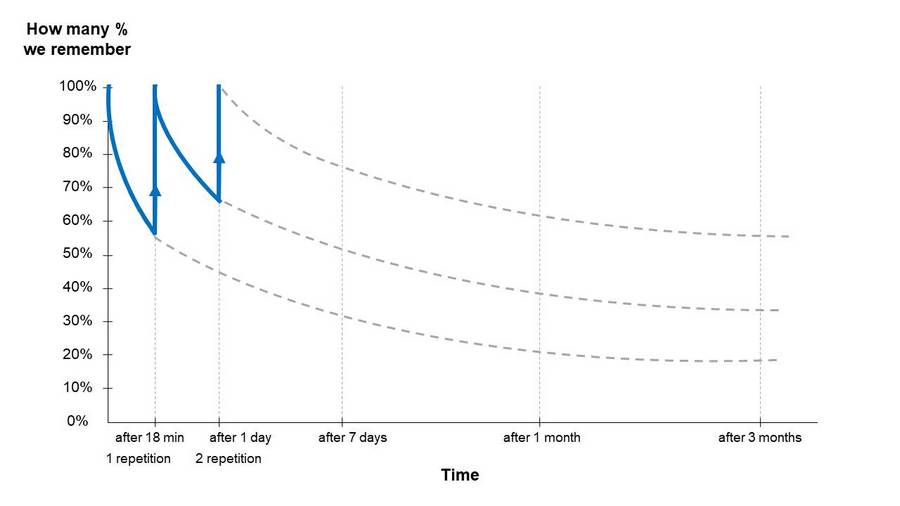
The second Ebbinghaus’ curve above shows that thanks to regular repetition in just the right intervals (more frequently at the beginning and less frequently later), you will gradually remember even those words which you would otherwise naturally forget. As you can see from the chart above, the forgetting curve (dotted line) drops less rapidly if we review the words once, and even less rapidly if we review them again and again later on. (The numbers vary in different sources, but the principle stays the same – thanks to the process of repetition, you forget less and less.)
Most modern methods of learning vocabulary use this system or a variation of it. Good examples are the Goldlist Method, apps like DuoCards or Anki and – you guessed it – flashcards!
App or paper? Whatever floats your boat!
If you prefer digital flashcards, my first choice is DuoCards (it works on both Android and iPhone). With an app, you don’t have to think about the SRS. These apps already use an SRS algorithm, so they know when to show you a card you need to review. With paper cards, you have to take care of the spaced repetition system yourself and in this article, we’re going to show you how to do it. Don’t worry, you don’t need any special technical skills, as it’s all very simple.
If you set up your flashcard system right, you’ll see your vocabulary growing every day. And most importantly, you will also be able to use it in real life, not just passively understand it. So, let’s get to it!
Creating your own cards
You’ll need:
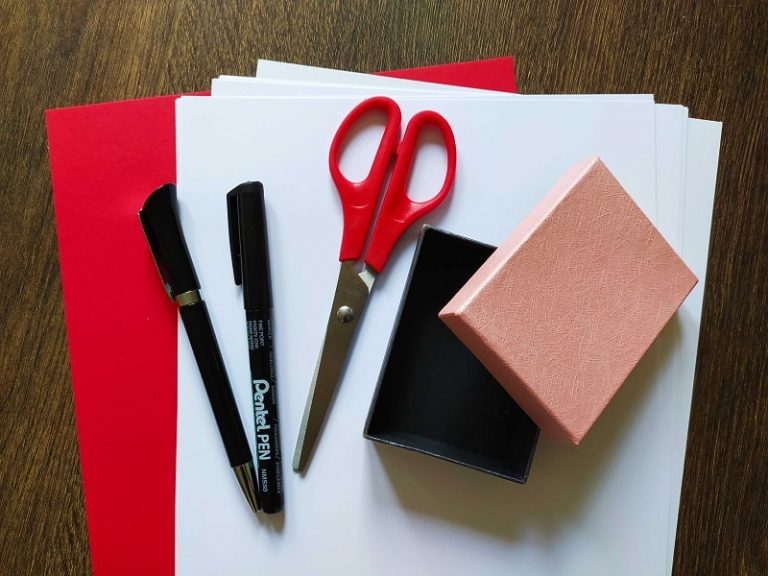
- regular paper (white or colored, it’s up to you) or pre-cut cards from a stationery shop,
- thick colored paper or cardstock,
- scissors,
- a pen,
- a nice box to put your cards in,
- a crafty mood ☺
How to do it:
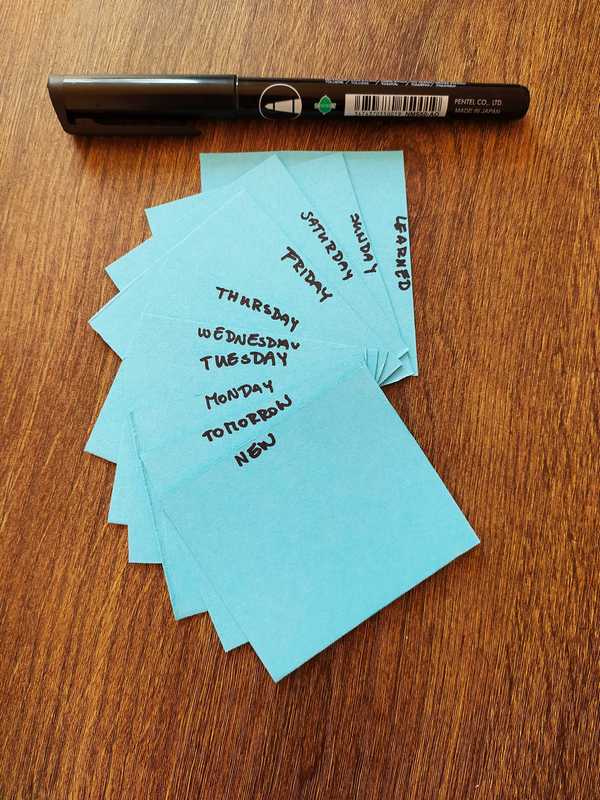
1. Cut the regular paper into cards or use pre-cut cards from the shop. Make sure they’re the right size – they have to fit into the box.
2. Take the cardstock or thick paper and cut it into 10 cards which are slightly taller than the regular cards. They’ll serve as dividers for your box.
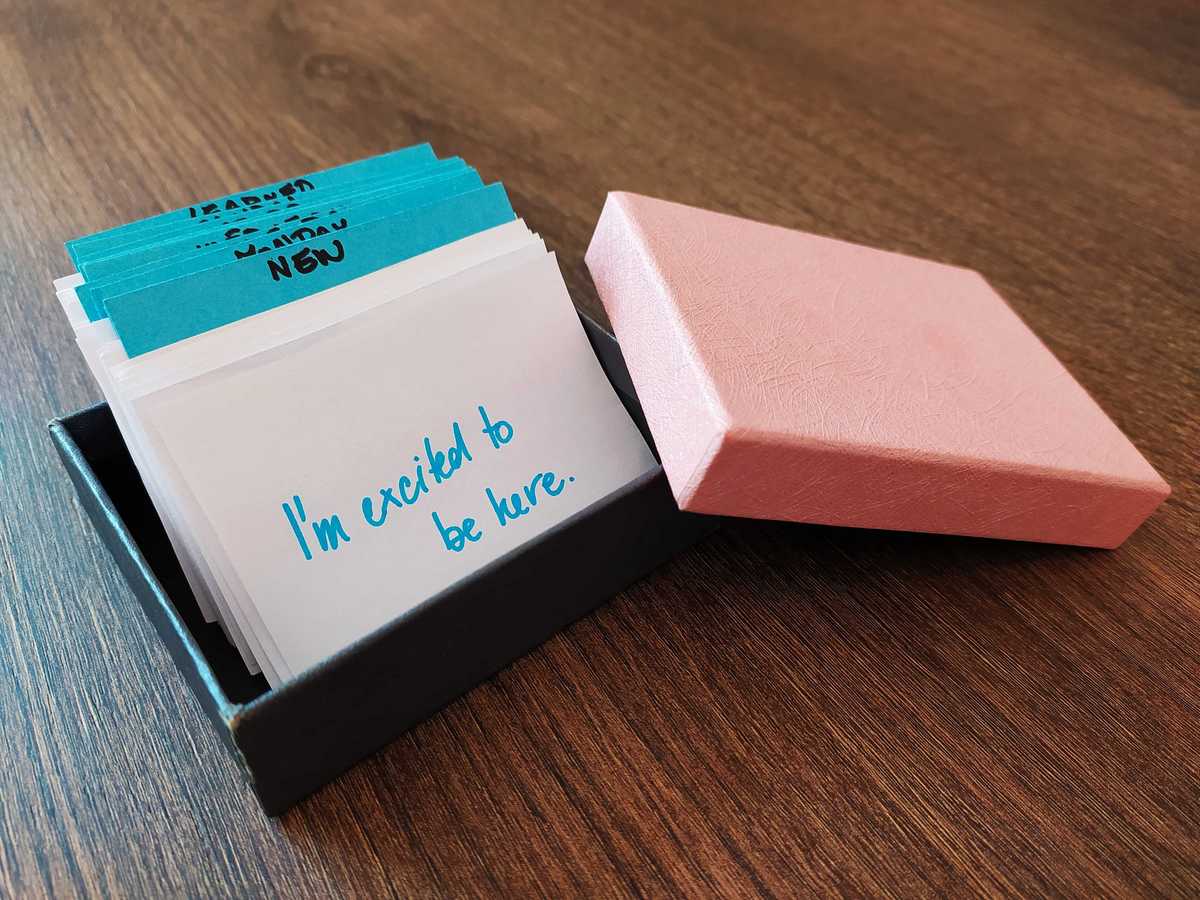
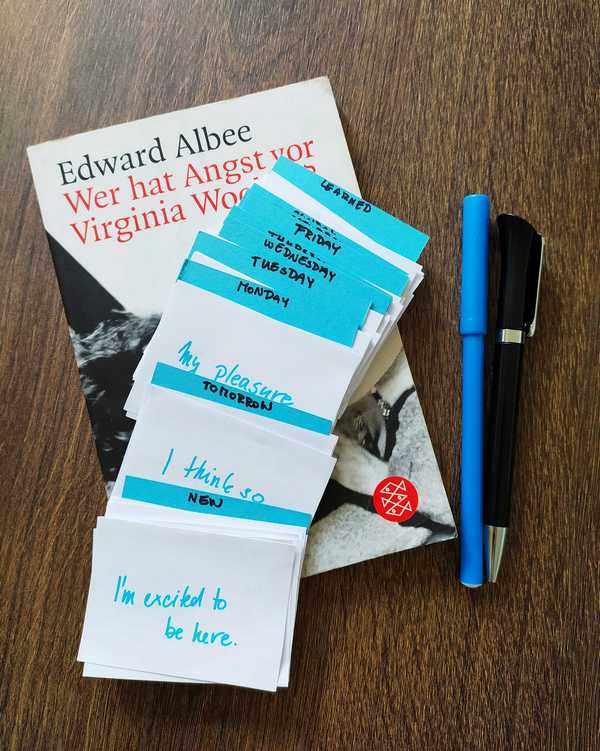
3. Write the following words on the top part of the dividers (one on each): NEW, TOMORROW, MONDAY, TUESDAY, WEDNESDAY, THURSDAY, FRIDAY, SATURDAY, SUNDAY, LEARNED. Stack them in this order (the card with the word NEW should be on the top) and put them in your box, creating “folders” to put your cards in while learning.
4. At the beginning, put all your blank cards at the end of the box, after the LEARNED divider.
5. Whenever you find a word/phrase you want to learn, take a blank card from the back, write the expression in the foreign language on one side and the translation on the other side. Afterwards, put the card in the front, i.e., in the NEW folder. We recommend making more cards at once, for example at the weekend, so you don’t have to make them every day.
Unleash your children’s creativity!
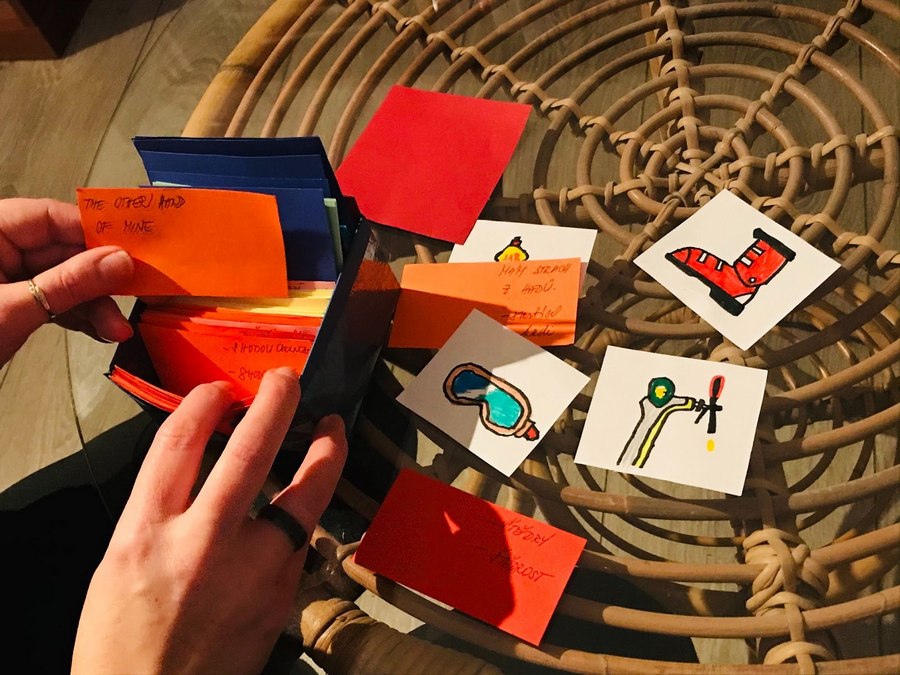
If you have kids, feel free to involve them in the creative process of making cards. Just like our colleague Veronika, who discovered that her sons loved helping her make flashcards and decorating them with lovely pictures of the words she was learning at the time. They also had a chance to see that adults have to learn as well, just like kids do at school.
Ready? Let’s learn!
How to start learning when you’re at the beginning:
1. On day 1 (let’s say it’s Monday to keep it simple), take 5 cards from the NEW folder. Read the side with your native language and try translating the word or phrase into your foreign language. No matter whether you were able to do it or not, put the cards into the TOMORROW folder. That’s all for today. Pretty quick, wasn’t it?
2. On day 2 (Tuesday), take the cards from the TOMORROW folder and try translating them from your native into your foreign language. If there are some cards you can’t translate yet, put them back into the TOMORROW folder. Put those you were able to translate into the TUESDAY folder – you’ll get back to them in a week. Afterwards, take 5 cards from the NEW folder and repeat step 1 – review them and put them in the TOMORROW folder.
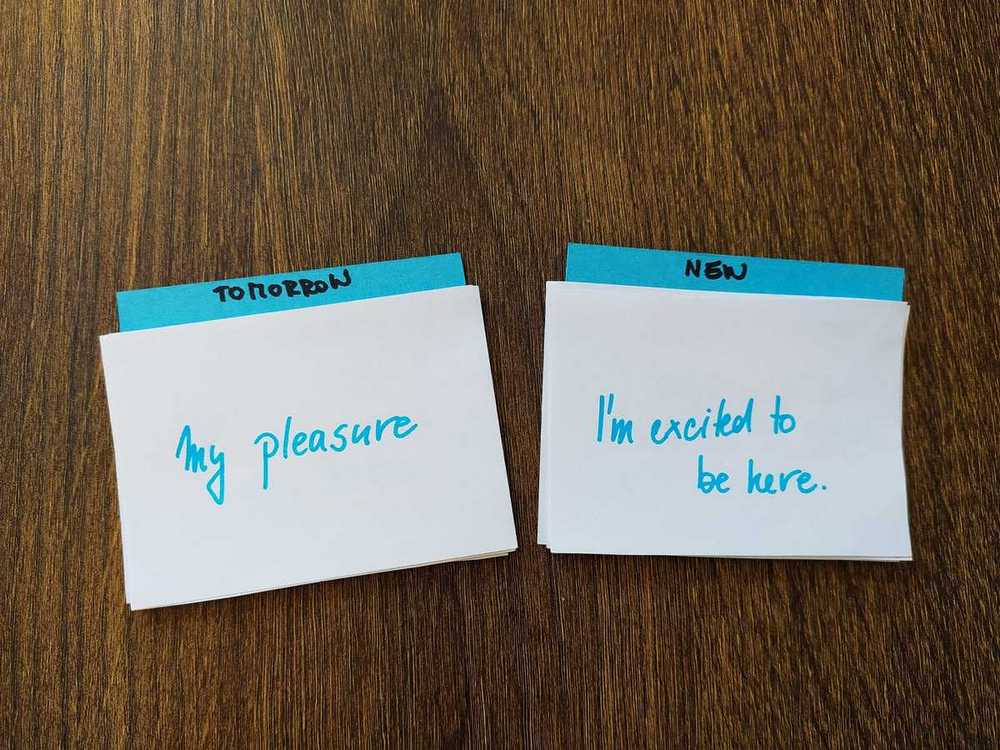
3. On day 3 (Wednesday), take the TOMORROW cards and try translating them. If you succeed, put the respective card into the WEDNESDAY folder, if you don’t, put it back into the TOMORROW folder. Then, repeat step 1. You will do this every day.
After a week, you’ll need to add another step:
- On Tuesday of the following week, review the words from the TOMORROW folder, take 5 NEW cards and do one more thing: take the cards from the TUESDAY folder (the ones you were able to translate last Tuesday) and review them.
- Put the ones you can translate easily into the LEARNED folder.
- Leave the ones you can translate, but not very confidently or with a small mistake, in the TUESDAY folder. You’ll review them again in a week’s time.
- If you can’t translate some of the TUESDAY cards at all, put them into the TOMORROW folder. You’ll review them again tomorrow.
- On Wednesday, repeat the process from Tuesday: Look at the cards from the TOMORROW, NEW, WEDNESDAY folders. Keep it up and you’ll see how quickly the LEARNED pile will grow. ☺ Do go back to the LEARNED cards from time to time to make sure you still remember them. If you find a card you’ve forgotten in the meantime, put it back into the TOMORROW folder.
It only takes a bit of practice
When written like this, the process might seem a bit complicated, but there’s nothing to worry about. It’s very intuitive and logical. Just try it! The aim of the repetition and categorization is for you to come across new words more frequently (even if it’s every day) than older ones (which you will only see once a week or only occasionally).
Don’t be afraid to experiment!
This is just one way of working with paper flashcards. There are many variations and you can even learn grammar this way! And if you don’t feel like making flashcards by hand, DuoCards does the spaced repetition for you.
So? Are you going to give paper flashcards a chance? If you’re not very tech-savvy or you’re just trying to limit your screen time and you don’t like the idea of vocabulary apps, paper flashcards are the right thing for you! Making cards and learning with them is fun and they’re incredibly effective. You’ll see that while speaking, your new phrases will suddenly come to your mind much more quickly than before! Good luck!