

Have you ever wondered whether you could learn a foreign language by listening to songs? Or are you learning with a set plan, but want to bring something fresh into the process? Whatever your reason, this article answers one question: are songs a good way to learn a foreign language? We’ll discuss their pros and cons and tell you what to watch out for when trying to learn a foreign language from songs.
Is listening to songs an effective way of learning a foreign language?
We don’t want to disappoint you, but songs are not a very good way to learn a foreign language. The time you spend listening to them could be used much more effectively. For instance, like this:
» If you want to listen to songs to improve your understanding of spoken language:
In this case, we recommend a more effective method, such as listening to podcasts or watching series. Songs are full of metaphors and poetic devices you won’t use much in conversation. Podcasts, on the other hand, you can hear language as it is spoken in everyday situations.
Furthermore, our brain only remembers things it can understand. If you’re listening to a song whose lyrics you don’t understand, you’ll only remember its tune and possibly the chorus, which usually repeats several times.
However, with a podcast (a monologue or dialogue on a specific topic), you might not understand every word, but you can probably summarize the main ideas of the episode afterwards. In the case of songs, even native speakers are often left to wonder what on earth the lyrics are about.

» If you want to use songs as a source of new vocabulary:
Be careful what you write down! Songwriters often make “deliberate mistakes” to make the lyrics rhyme better or make them easier to sing. We could list hundreds of examples in any language, but we’re just going to show you a few in English, so that everyone can imagine what we mean. For instance:
- Double negative in the song Satisfaction by The Rolling Stones: “I can’t get no satisfaction.” (Correct: “I can’t get any satisfaction.”),
- an adjective used instead of an adverb in the song Boyfriend by Justin Bieber: “If I was your boyfriend, I’d treat you good” (Correct: “If I was your boyfriend, I’d treat you well.”),
- wrong pronoun in the song Hungry Eyes by Eric Carmen: “I feel the magic between you and I” (Correct: “I feel the magic between you and me”).
Bilingual books are a much more reliable source of new words. They have the original text on one page and the translation on the facing page. This means you can easily verify the meaning and translation of new words and phrases.
» If you want to listen to songs in a foreign language to improve your pronunciation:
If you want to sound more like a native speaker, songs alone aren’t enough. It’s much better to listen to lots of podcasts, series or audiobooks, in which the pronunciation is much clearer than in songs. Singers often rush and “swallow” syllables in order to fit the lyrics into the tune.
How to get the most out of listening to songs?

First of all, we’d like to stress one more time that songs alone aren’t enough listening practice. But if you enjoy listening to your foreign language in the form of music as well, there’s no reason not to! Despite everything we said, songs have some good sides. That’s why they can be a fun supplement to your regular learning:
» You can do listening practice in the company of other people
When people hear a song in a language they don’t speak, they usually don’t mind. They just enjoy the melody. That’s why you can listen to foreign-language songs even when you are with people who don’t understand them (e.g., at home, in the car with your friend, at work…). Just imagine their reaction if you played an episode of a French podcast instead!
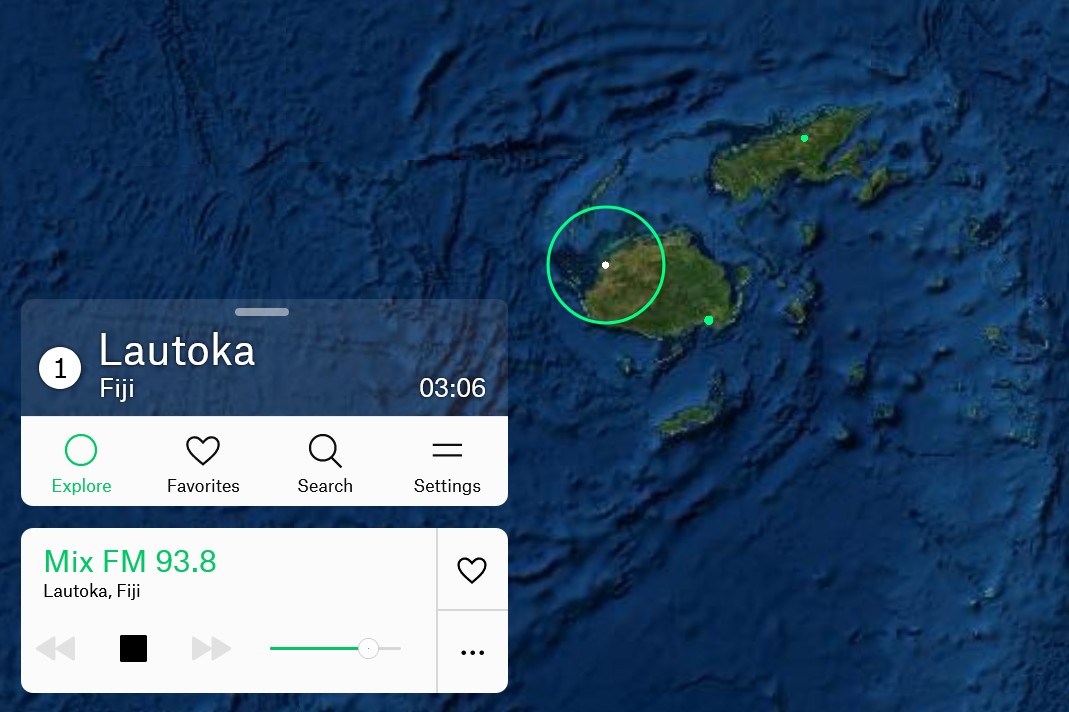
TIP: Listen to radio channels from all around the globe! On the Radio Garden website, you can find every internet radio from literally any country in the world, even tiny ones like Fiji! Simply choose the country whose radio you want to listen to and voilà, start listening!
» It’s just like learning nursery rhymes
If you find a song with a catchy chorus, you’ll end up singing or humming it later without even noticing. It really helps if the lyrics rhyme and the chorus repeats several times. However, this will only be useful if you can understand the meaning of the words and recognize grammatical errors (if there are any). Otherwise, you might just “make the lyrics up” and end up “stapling the vicar” like the comedian Peter Kay. ?
TIP: Look up song lyrics on the Internet. Simply type the name of the song and the artist into the search bar, add “lyrics” (for English), “Text” (for German), “letra” (for Spanish), “paroles” (for French) or “testi” (for Italian), and hit Enter. Write the lyrics down on a piece of paper or print them out and translate them.
Apart from the deliberate grammar mistakes we mentioned earlier, you should also watch out for the vocabulary in songs, which might contain lots of slang and other substandard expressions. Of course, that depends on the musical genre. However, in modern songs, you’ll often find words you wouldn’t use in polite conversation.
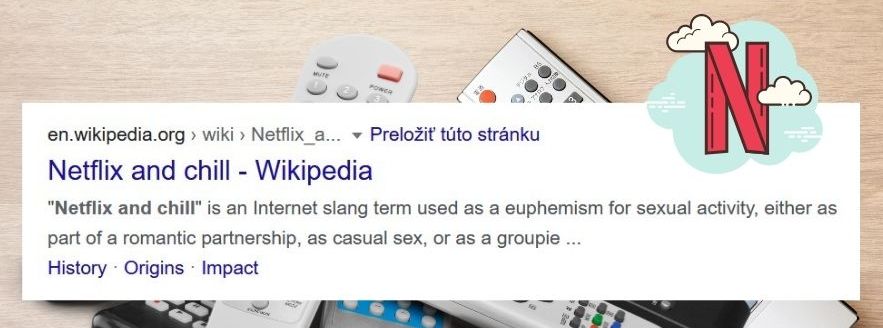
Moreover, some innocent-sounding expressions can have a completely different meaning than you’d expect. If you’re not sure about a word or a phrase you found in a song, check it on the Internet. Sometimes, a simple Google search is all it takes. Look through the results of your search and find out what context(s) the word is used in. For example, if English is not your native language, do you know the real meaning of the phrase “Netflix and chill”?
If you like to sing, learn the lyrics by heart and sing along! You can actually find karaoke versions of many famous songs on YouTube! That way, you won’t hear the singer, just the melody. You will even see the lyrics on the screen in most cases.
» It’s fun!
If you like music and enjoy listening to songs, it’s only natural for you to look for songs in your foreign language. You can really find a lot of them on the Internet. For example, you’ll definitely discover lots of great music on YouTube! Learners of English have it super easy, but there are tons of songs in other languages, too! Music streaming services like Spotify or Tidal come with many ready-made playlists, so if you want to listen to Latino hits in Spanish, you can easily find them with just a few clicks.
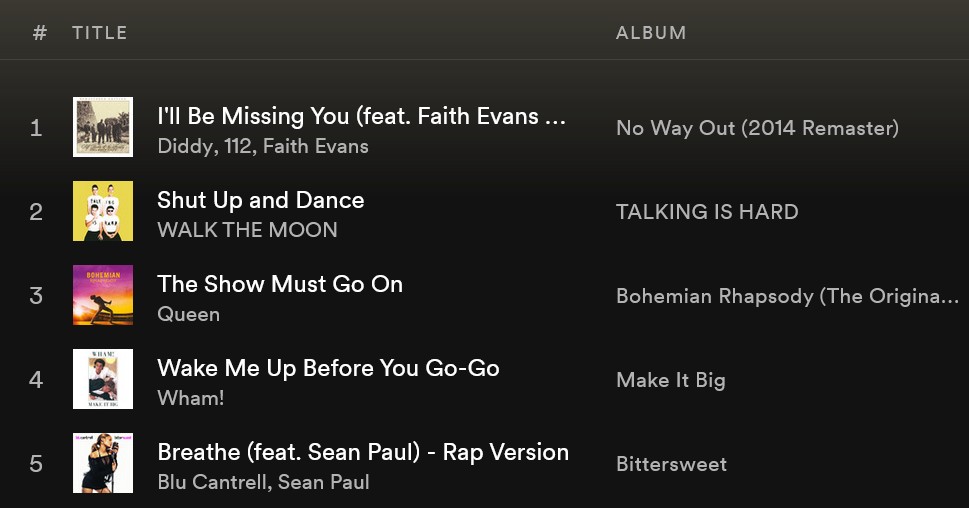
TIP: Challenge yourself and create a playlist of songs that have something in common. Songs about a specific topic, songs that feature a certain grammar point or, ones that feature a certain grammatical phenomenon or, even better, your favorite songs in the language you’re learning! For instance, we’ve created a playlist which only contains songs that have a phrasal verb in the chorus. It features big hits such as “Shut Up and Dance”, “The Show Must Go On”, “Never Give Up” or “Turn Off The Light”. You can find the whole playlist here if you’re looking for inspiration!
Use effective methods
Listening to songs is fun and it can be a great way to freshen up your learning, but don’t forget that it’s not the most effective way to improve your foreign language skills. If you’re frustrated that you still need subtitles for series, and that even after years of learning you can’t understand native speakers, you may have been using the wrong methods all along. Don’t just rely on the short listening exercises in textbooks. If you want to see real progress, you have to regularly do lots of effective listening practice. Want a listening plan that fits your level, your goals and your week? ALMI, our AI language mentor, will put one together for you, for free.